American storytelling has a problem and it needs your help to fix it
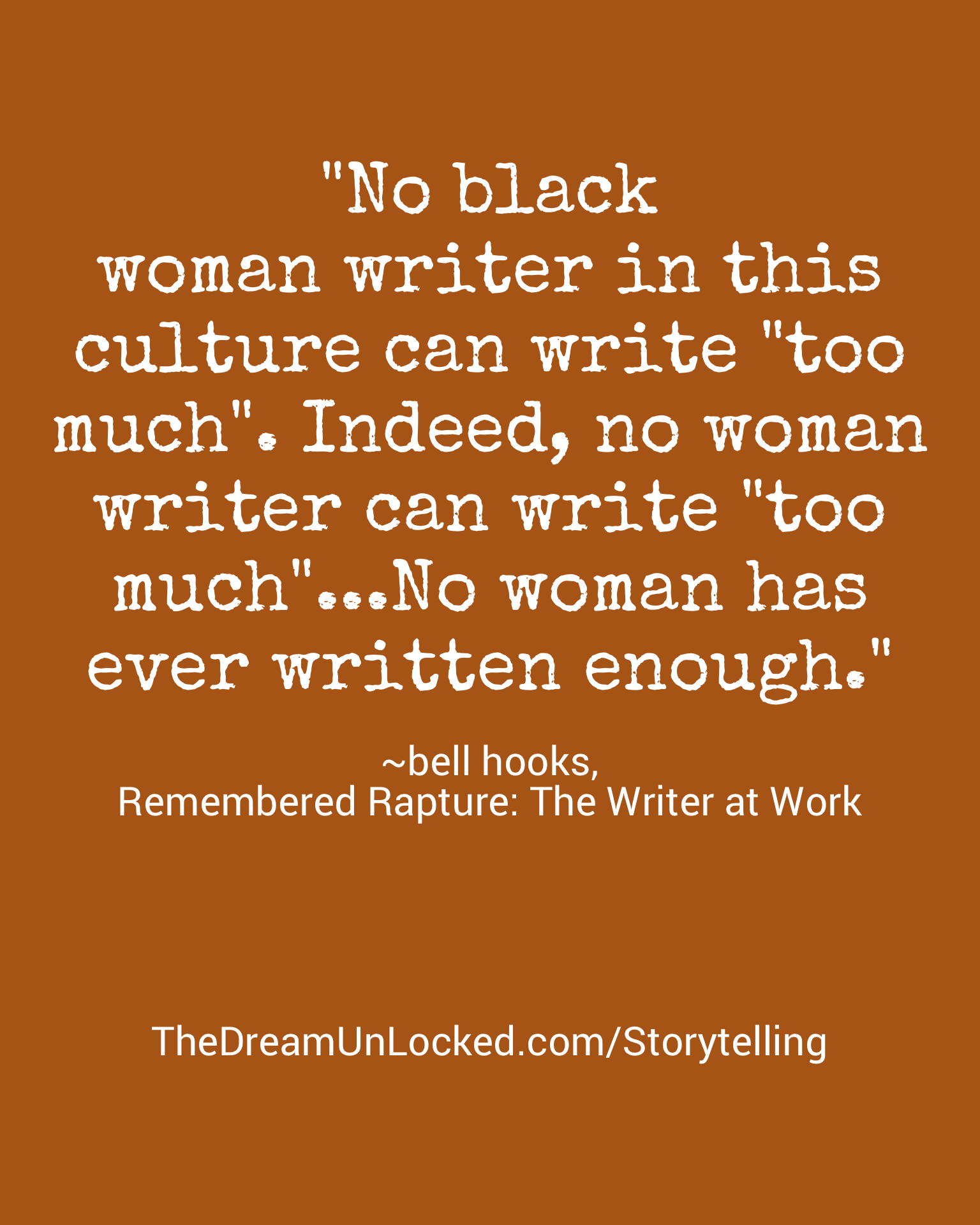
From its inception, theatre was not separate from the church or places of worship. Theatre was and has as always been one person telling a story. All the other bells and whistles are something we added later like adding extra toppings on a sundae. Does it taste good? Maybe, but more than likely it just ends up being an excuse to spend more money. A good story doesn’t need the bells and whistles. As a matter of fact, they often distract from the wonder, clarity and urgency of a story.
StoryTelling answers all the questions we’re too afraid to say out loud. The questions that elude us while also punishing our ignorance.
You don’t need a $60 million dollar loan for a building to get those answers, What you need is a generation of master storytellers. StoryTellers who tell difficult truths that lead to the kind of problem solving we so desperately need right now.
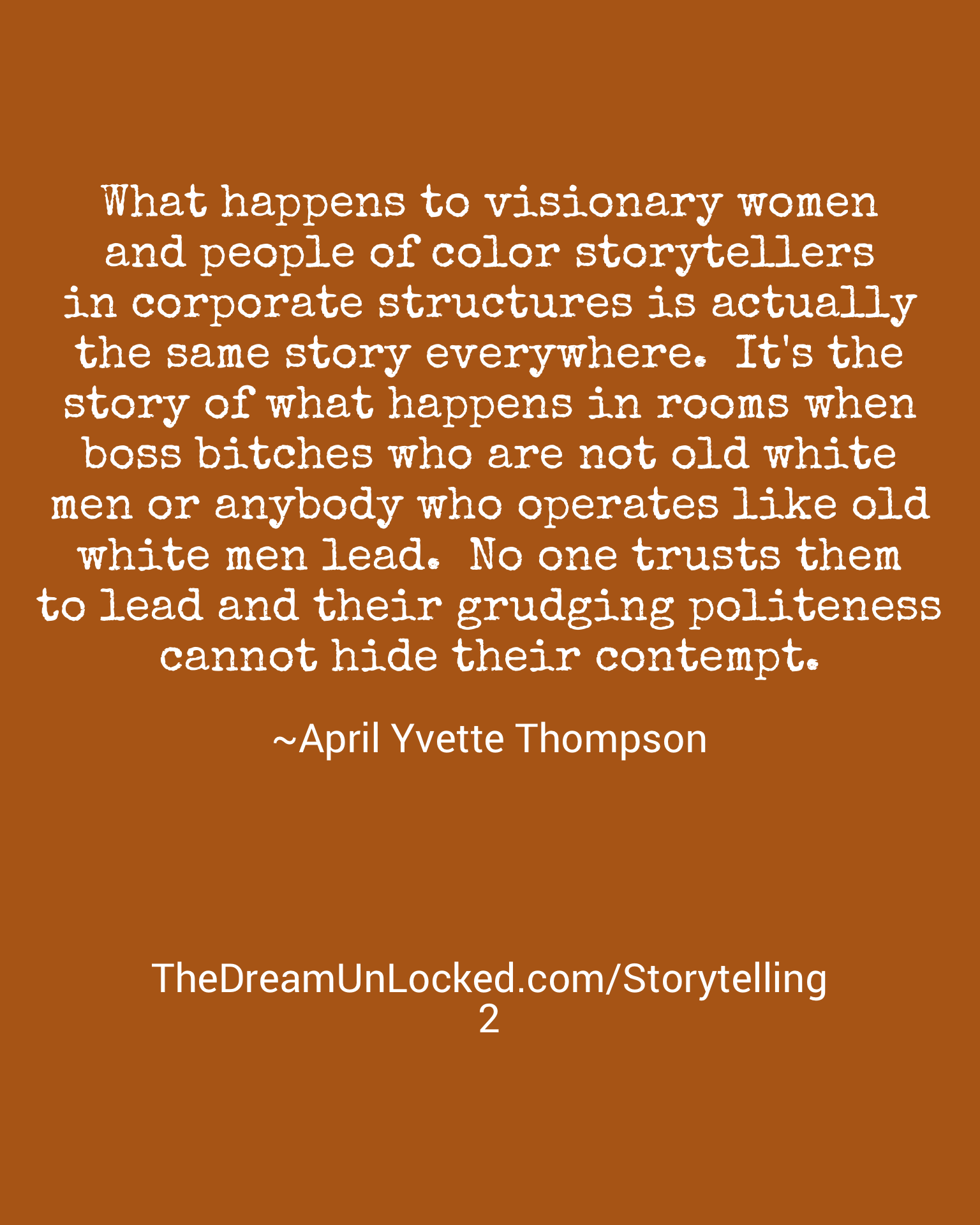
And quite frankly, in a country without affordable healthcare, housing and education, that kind of spending is in really poor taste. Imagine stepping over homeless families in your gown en route to see a play or movie opening in a huge, barely filled theatre. That is the current state of the theatre.
Yet, the American theatre has spent decades telling stories that have nothing to do with the people in the communities that they serve or their lived experiences. And even more egregiously, it chides, ignores, starves and condescends to the StoryTellers doing the heavy work of changing the world.
For example, the biggest kept secret is that theatre donors will shell out millions for a building and pay its artists, $400 per week. You heard me….that’s real.
It’s why Yale and Juilliard have gone tuition free because without that necessary focus on creating our next generation of playwrights, memoirists, screenwriters, we’ll be watching reality TV and then playing that out in public discourse as if that’s news. And no one will be reading, writing and critically thinking.
Oh, wait a minute, we’re already there…hence my urgency and concern.
When did storytelling become about buildings instead of well crafted stories and supporting the people who write them?
As a result, it’s become a tradition that most professional American theaters spend decades at a huge deficit because they continue to make work that cannot compete with sports arenas and musicians.
So, instead of turning course and changing the how and what of the stories they tell, what do they do?
These theatres hire bright, super talented, experienced artistic directors of color and then undercut all of their power.
Remember, these theatres are in millions of dollars of debt, right. Arena Stage alone has been carrying a $60 million dollar loan taken out in 2018 (to cover the previous decades of debt) and was re-negotiating how to pay that back by the end of 2023. At the same time they brought in a new AD of color.
Did no one inform the new AD that desperate financial measures were needed to be enacted?
Did they give a timeline for recoupment?
Or did the board simply expect the new AD to come up with a plan to pay off the debt in 3 years?
Because that’s how long the board gave Hana S. Sharif to try to make sense of Arena Stage’s historical debt.
Sorry, that’s crazy.
Between 2020-2026, major American Theatres have been virtue signalling their inclusivity while undermining the very leaders they hired in an effort to find scapegoats to hide decades of poor financial management.
Because as soon as those artistic directors successfully began bringing down the debt (that their tenure did not incur) by scoring record breaking ticket sales, producing new work that creates new audiences; they are forced out of their jobs for doing the very thing they were hired to do.
These Artistic Directors of color were hired and fired within 3 years while most AD’s hold those positions for decades:
Long Wharf Theatre AD, Jacob Padron
Arena Stage AD, Hana S. Sharif
Baltimore Center Stage AD, Stephanie Ybarra
Oregon Shakespeare Festival AD, Nataki Garret
3 years later, they are all gone.
Why?
Because they started telling stories people actually wanted to see and making money doing it. But the audience was not white or male enough for the theatre’s taste.
TV/Film storytelling has followed a similar trend. It’s gotten so expensive to tell a story on film, that producers are hiring AI to do it instead of master storytellers. Sit with that. Corporations are deciding what stories should be told and basing those decisions on their bottom line.
Meanwhile the Los Angeles wild fires are burning through suburbs like its normal while they water AI Data centers in desert cities that are slowly burning to the ground. They make movies about our self destruction ad nauseum while dispensing with hiring human beings, in favor of AI. Those corporations will become virtual and their CEOs will move to their luxurious compounds in New Zealand while the world burns.
Book publishing has taken an equally inane path. Everyone and I mean everyone, loves The Alchemist because it is the simple story of a boy on the hero’s journey to make something of his life. It’s compelling and could happen anywhere: in a house, a backyard, in a field. What drives the story is the weight of its imagination, the huge emotional stakes and the hero’s need for meaning and purpose. Did it make money when it was first published? Not a dime. It took decades for it to become the global phenom it is today. There were no rich people getting richer in The Alchemist. It was the story of every man, woman and child on the planet. It brought people together without any bells and whistles. We have been so inundated with rubbish, that we’ve forgotten the power and majesty of the simple craft of storytelling. Yet, at the same time, we so desperately need its wisdom.
This is where we are: desperately searching for stories of basic human decency and connection. All of these forces are working against us. Reality TV, fake news and now AI are destroying the careers and union wages of many of our greatest storytellers. In order to eat, playwrights have left the theatre for TV/Film where they are faced with AI as their competitors. We need a StoryTelling movement before the craft of the storytelling disappears.
This problem is endemic of a much larger trend.
The very moment we need weavers of pain into light, those weavers are have left the building destroyed by all the forces at work who cannot make a buck from simple, masterful storytelling. Audiences have abandoned traditional storytelling in favor of storytelling that reflects the unprecedented times in which are living. The most exciting soul nourishing work with huge audiences is happening in some of the most unlikely places because we’re hungry for the kind of stories that make us want to fix all that’s gone wrong.
So where are these unlikely places? And what happens to people in a climate hostile to truth and light, empathy and compassion, complexity and the fullness of the human condition?
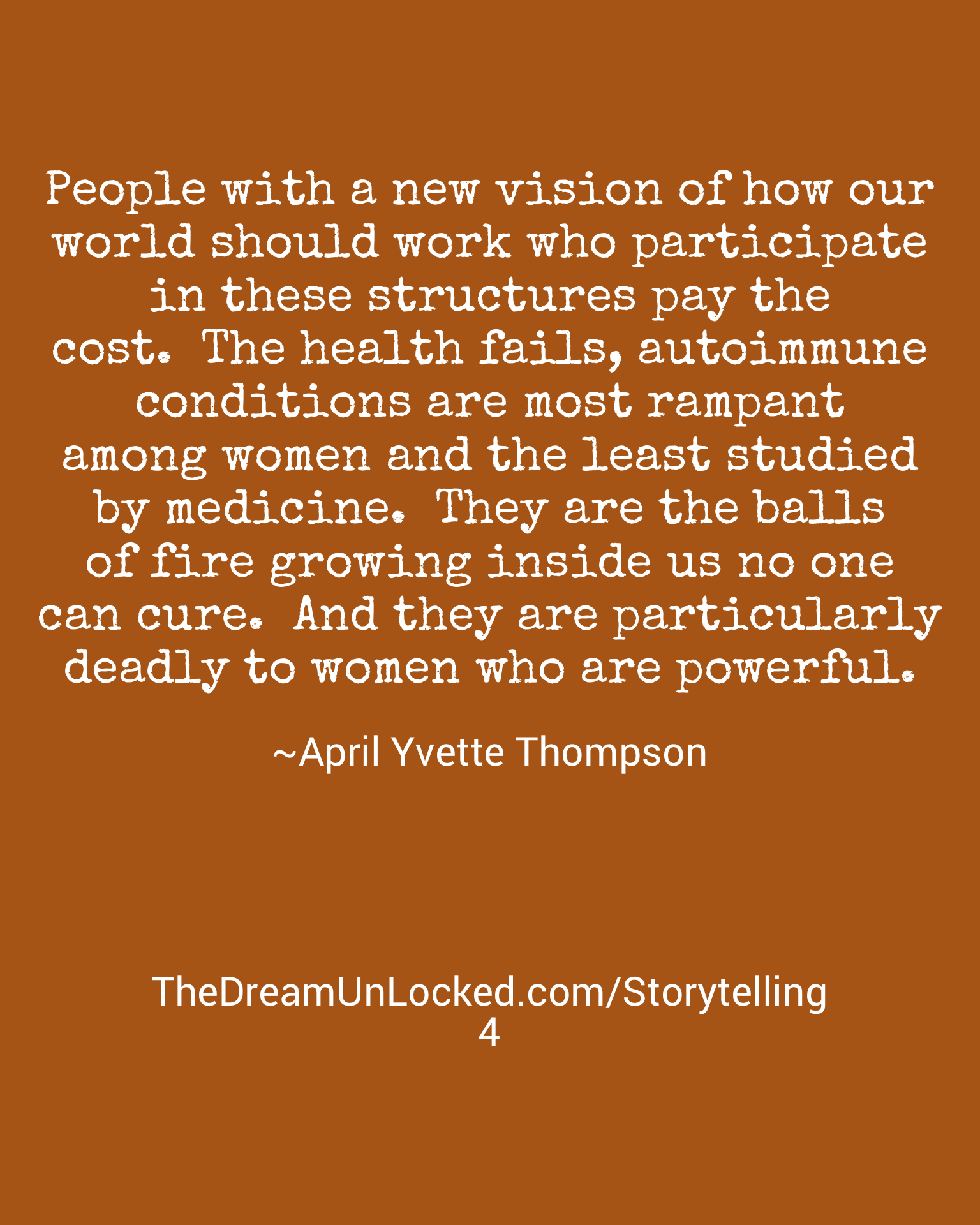
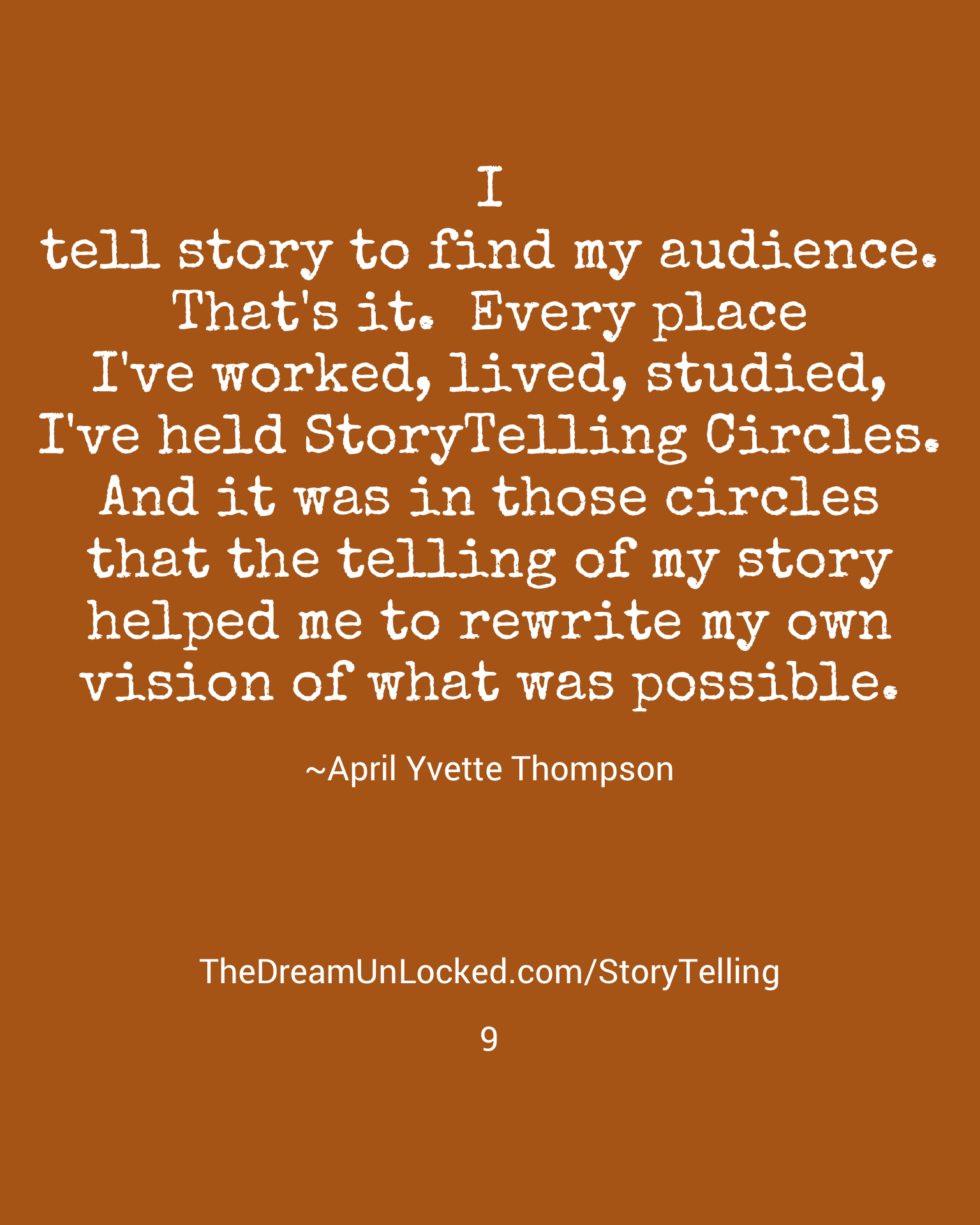
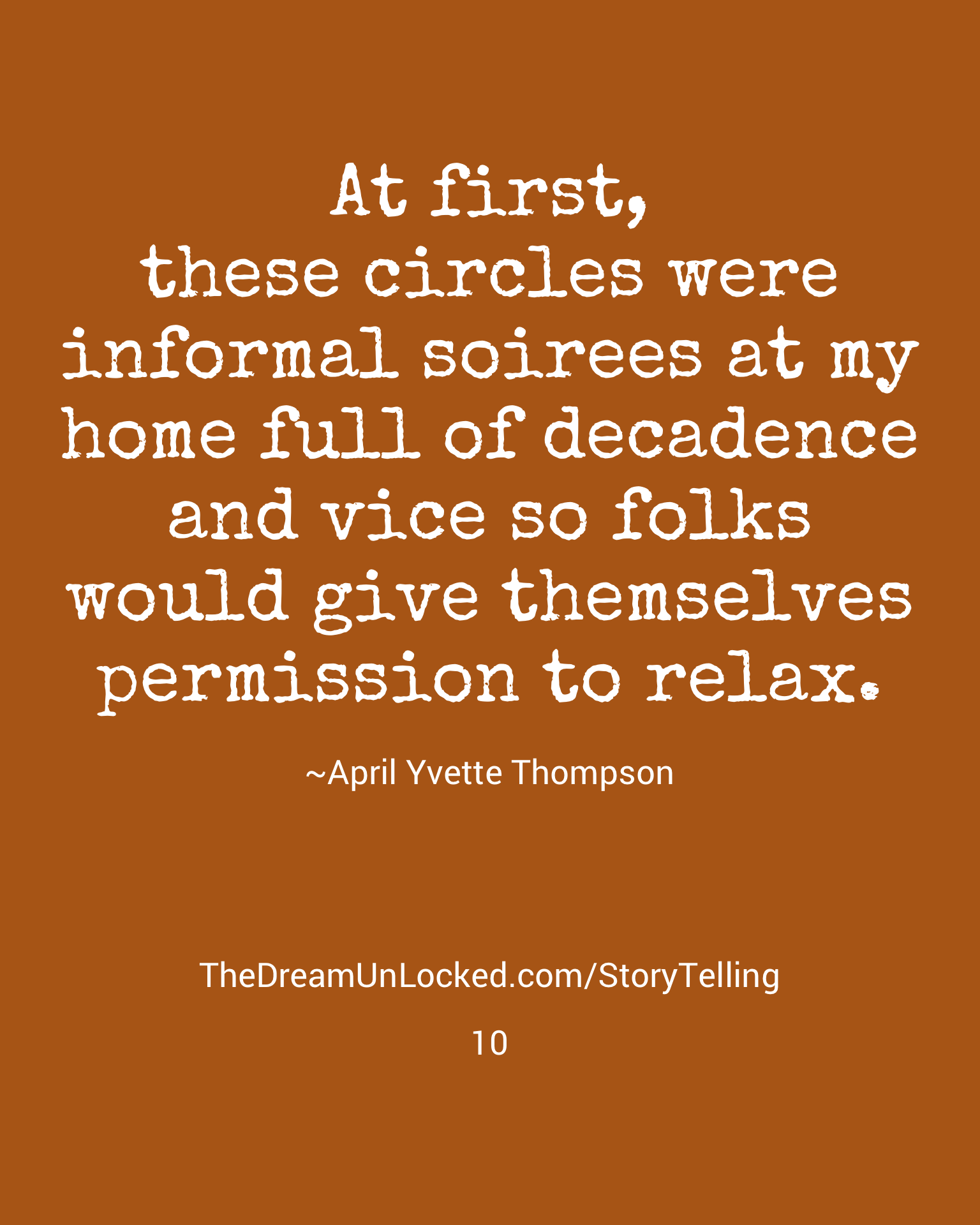
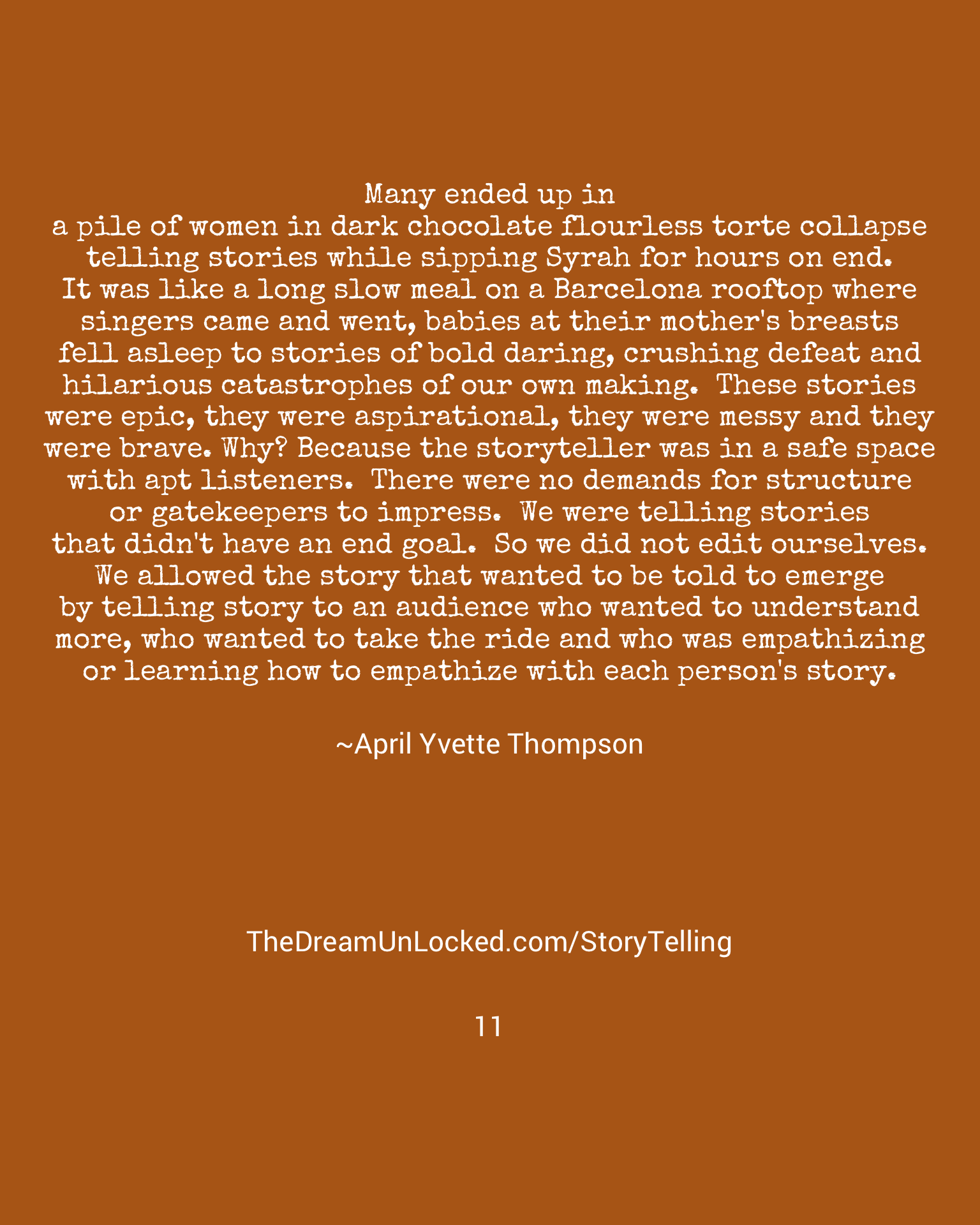
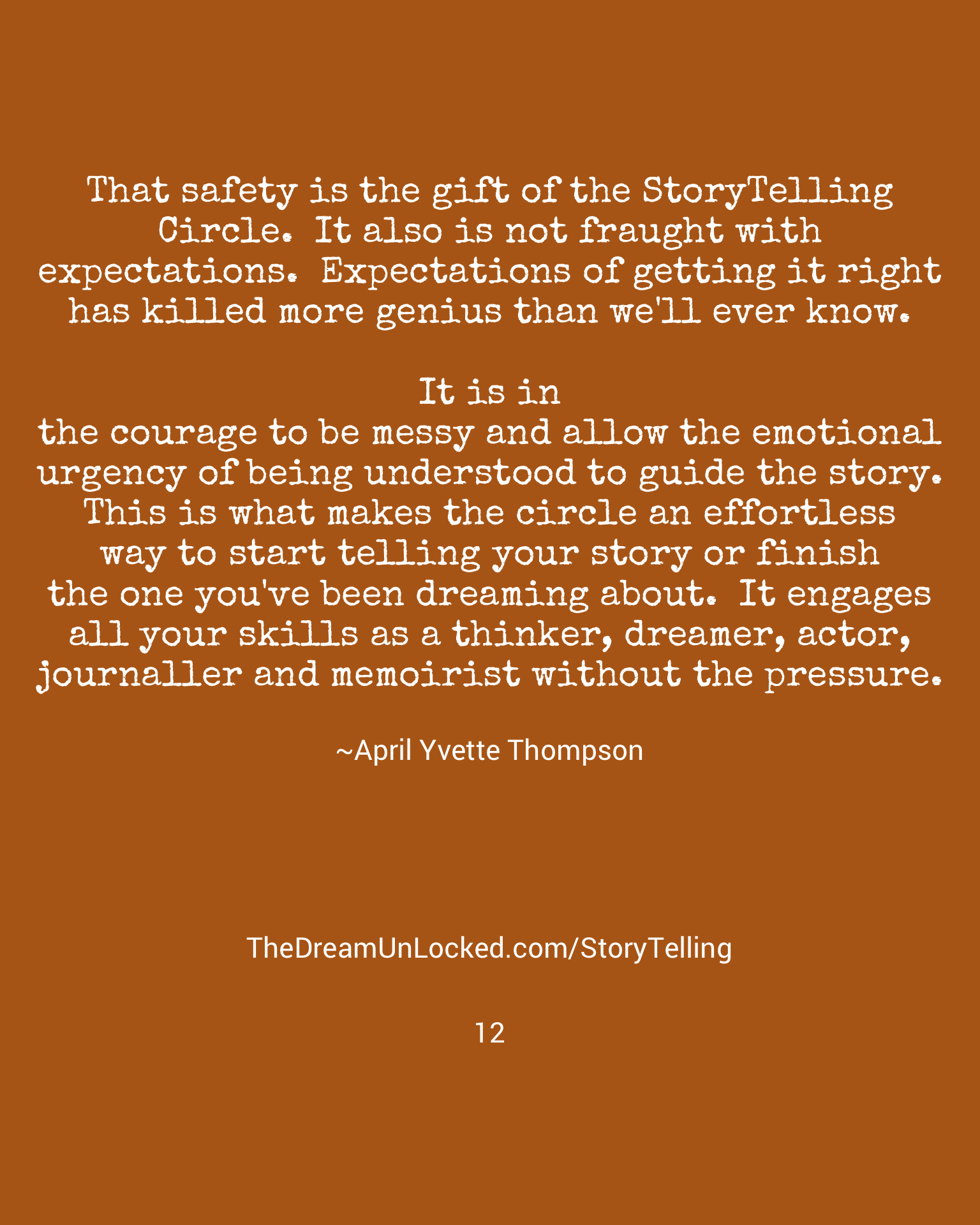
Enter the StoryTelling Circle
A lo-fi, organic way to learn how to start, finish and structure your story.
This is where we fill in the gap left by the world of storytelling that refused to move into the 21st Century.
The StoryTelling Circle kicks Writers’ block’s ass
It helps you find the time to write and monetize your stories
TheStoryTelling Circle is where you get your mojo back, where you get unstuck and begin rewriting the story of you
This is where people who have never written anything leave with stories at the end of a 3 hour class.
The StoryTelling Circle is where we celebrate instead of doom scrolling
This is where we throw away concerns about what it should look like and focus on weaving pain into light.
This is where we write the stories we want to read and see.
And when you commit to the process with your whole soul, you’ll find a way to save time, tell your story and make a living doing it.
Keep reading to learn more about the StoryTelling Circle
Carla’s Story
I want to tell you about an amazing client of mine who we’ll call Carla (for the sake of privacy) who sought me out during the pandemic. She had slips of paper everywhere, journals and actual stories already written that she was not sharing.
She joined the 12 Week StoryTelling Circle and was very quiet at first. We worked on folks opening up by sharing why they wanted to write.
Then when she shared about the end of her marriage and how having kids, a career, the loss of her mother and a high powered corporate job with a relentless demanding boss made her feel; something profound happened.
As she told her stories in the midst of this empty nest phase of her life, we were recording them. Then each person’s stories were read by another person.
When she heard herself outloud for the first time, it was as if she was speaking to her younger self, her dreams that she had left behind in service to every one except herself.
She didn’t need anyone to tell her why she was stuck. As she recalled each and everytime she spoke up for herself and was shut down:
Each moment she sacrificed her dreams in service to
the family’s dreams,
the husband’s dreams,
her mother’s dreams.
She realized how far she had stepped away from her own.
You see Carla was living to make other peoples dreams come true over and over again. Once she heard her words read aloud by another person, she started to remember who she dreamed of becoming.
Every woman in the circle was totally invested in her story. Using the Roshamon Technique which I use to help writers create character and authentic POV, she could reimagine step by step where she could have made a differenct choice for herself without compromising the ones she cherished.
She realized that her ever present exhaustion was less about sleep and more about an inability to see options for herself.
But, once she started writing and hearing her words over and over again, week after week in an supportive environment with lots of personal attention; she could finally see herself like a character in her story choosing to act from a sense of agency and excitement about the new life she could create once she left the punishing job; the absence of the high maintenance ex husband and the support of her adult children, she saw opportunity instead of chaos.
Writing her story and having the accountability of showing up each week like a weight watchers meeting with a small group of women supporting her every step, eager to hear what new adventures she set her mind to was exciting.
RESULTS
That year, not only did Barbara outline and write the the first half of her memoir, she also, left her job and started teaching her process of writing as a place to heal and reshape your future.
THE TRANSFORMATION
She also learned to stand up for herself and draw lines in the sand. Her ex-husband was no longer showing up at her door uninvited for a meal; her boss who had spoken to her as if she were an recalctrant child while her ideas were catapulting the business forward was sent packing. She left with a nice severance package to get her started in her new business venture.
You know what else the writing process taught her?
REMEMBRANCE & CHANGE
As she tracked each moment in her life where she had learned to be silent, to be quiet in the midst of horrible things happening; she went back to where she learned that pattern.
And lo and behold , she started telling the story of her mother, grandmothers and aunt who were German women who hid Jewish people from the Nazis in Germany. Her family was eventually discovered, the uncle was detained never to be seen agains and they had to flee Germany for America with the clothes on their back.
Carla had learned to be quiet when horrible things happened because her family’s response to war, genocide and concentration camps was to quietly hide peeople to save their lives.
Carla was a child of war and resistance. She learned to sacrifice her voice as an act of resistance. But when the war was over, her family was still practicing suffering in silence and it stifled the voices and power of a truly magnificent, brave family of women.
Telling her story in TheStoryTelling Circle, is where she identified the moment that derailed her life and writing it down helped her regain her footing.
In finding her voice as a writer, she found her lost voice in her life. Carla’s story was the lynchpin of that group of storytellers who met faithfully every week for 2 years.
How does the StoryTelling Circle work?
The work we do in the StoryTelling Circle takes a unique form. It begins with deep connective writing followed by recurring themes from your Dream Jar. Stories are then transcribed with the breath and the way in which the words were spoken written down like poetry. It’s the key to the generating story in a clear, succinct story structure.
It is an intuitive and organic StoryTelling technique that uses your lived experience and the emotional stakes that comes from telling a story to an engaged, safe audience.
This story was taken directly from the recordings that Susan made in class. It wasn’t edited or changed in any way. The story poured out of her effortlessly. All of the work we do beforehand over a series of weeks in the StoryTelling Circle allows the story to percolate in exercises, journals until we’ve created a set of recurring emotional chords that trigger the story falling from your heart to the page effortlessly.
Take a look

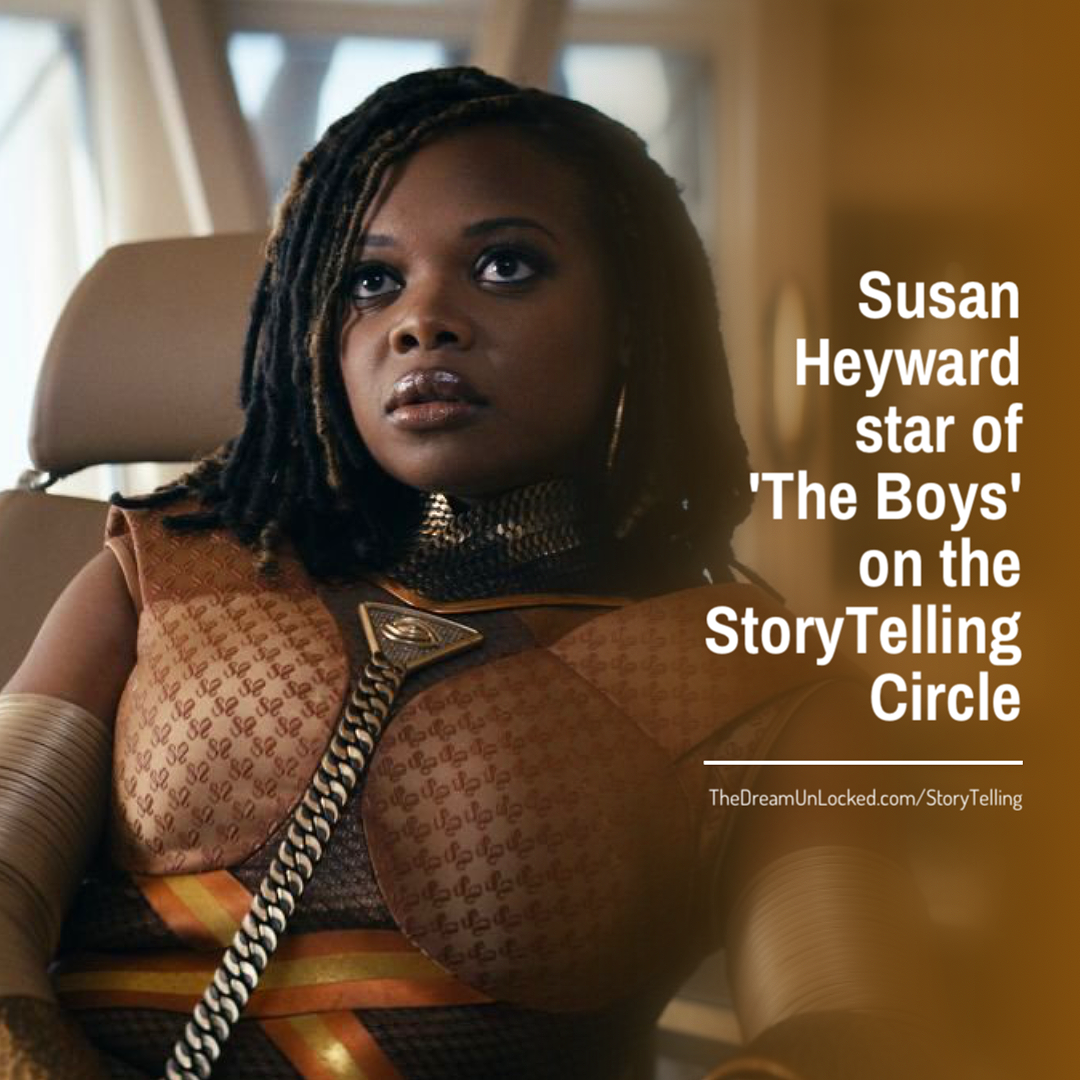
Permission to be a StoryTeller
by Susan Heyward
“There was me and about
20 other kids.
Ages, 13 to 17.
Sitting on the floor of a drama class, all of us drunk on our own melanin and hormones.
I was one of the 14 year olds.
And the teacher, her headwrap tight and her statement earrings in the silhouette of Neferttiti dancing said,
“Okay. What I want you to do is look at this empty room.
And someone, imagine where it could be.
Can be anywhere.
And I don't want you to tell us, but I want you, one of you, to get up and start behaving.
In that place.
Then.
Anyone who's watching, when you figure out where they are, you get up and you add your behavior to it.”
She and a couple other teachers sat and waited, expectant and sphinx-like.
As the Nefertittis settled down, we teens all kind of sat there looking at each other thinking. Aight. Where ya'll want to go?
And one kid got up, a guy, one of the older kids.
He stood in the middle of the room and he squeezed his hands in two fists. He held them with his elbows bent at 90 degrees in front of himself, shoulder length apart, thumb to pinky, as if he were holding a police baton.
He leaned back, swung his arms to one side as if the “stick” was heavy, then swung them towards the ceiling before bringing them down to the floor.
Then he did it again.
Boom.
Again.
Boom.
Again he arched up and then down to the floor.
I realized there’s nothing there, he’s not holding anything.
This is pretend.
I don't actually hear a boom.
I don’t actually hear a thud.
But the rhythm he created landed on my body just the same.
Boom.
I watched and tried to understand.
“ Ohhhh...it’s not a baton, they aren’t that heavy…he's, like, in a garden somewhere, like, working on...oh, the land!”
And so other people got up and started ‘working the land’ with him.
I thought, ‘Cool,they saw the same thing I saw.’
And then another kid got up and pretended to crack a whip.
And started to bark orders.
And suddenly we weren't just in a field.
We were on a plantation.
As soon as the whole class agreed that we were on a plantation, a bunch of my classmates rushed up to join and added to the world being built.
One of us pretended to be on a tractor.
One of us pretended to be feeding dogs, one of us pretended to be turning cotton into thread. Spinning. Spinning cotton into thread.
I was still on the side of the room, watching. I looked and I looked and I asked myself,
“Okay, how can I add to this world without repeating?”
I don't want to just do what everyone's doing.
and,
Something inside me pushed me up. Before I really knew what I was doing. I was walking gingerly up to one classmate, my hands heavy at my side, my back bent over and in a voice unlike my own, drawled,
“Want some watah?”And the way they looked at me. We'd stopped
Pretending.
We were just living.
My classmates.
A bunch of city kids at summer camp, they looked different to me.
They looked at me with gratitude and surprise.
Relief.
I gave water.
More water. A moment between each laborer and I.
Together, we slipped into this world.
This improv lasted for 20 minutes..
And it was incredible, the imagination and freedom and sense of ensemble we built.
Whoever decided to cast themselves as the slave master went full in, grabbed one of the girls who was in the field and walked over to a corner with her. We heard the sounds of a master taking liberties, the kind that helped my great great aunts move west and never to be seen by our black asses again.
( I should really track down that student and see how she's doing. How both of them are doing. I remember the teachers at the corners of the room coaching us, but I’m not 100%. All I remember is I felt safe enough to play the scenario, but I can’t speak for everyone. This would probably never fly in a classroom today, but I’d be lying if I said it felt anything other than natural and free and creative.)
The whole thing took on a life of its own. A momentum.
We all pretended to pick her up afterwards and put her back together. And she said,
“I've had it, I'm leaving, we're not doing this no mo! I’m runnin’!”
And then we were cooking with gas!
One of the guys piped up that he was her husband.
She couldn't leave without him and we improved “yes!” and went with it.
Okay, who else is leaving?
Oh snap! There's a whole group who decided to go.
Okay!
“I'm not going.”
The words came out of my mouth smooth as a curtain rising at the top of a favorite burlesque act.
From a place inside me that felt like home, I knew we needed conflict. So, right then and there, I decided, the water girl had to stay.
I also decided (gasp!) master’s victim was my sister!
So, I had to at least help her leave! Oh, and leave with her husband!
All these creative decisions, the freedom!
Just firing off like firecrackers.
Better than any drug.
(At least I imagine. I’m from the D.A.R.E generation, drugs scared the shit out of me so bad that cussing and theater were my addictions. Still trying to shake ‘em both.)
So
My‘brother-in-NOT-law-cause-we-was-playing-slaves-and-marriage-wasn’t-legal-for-the-likes-of-us’ plotted the whole escape, with a bunch of us huddled around him.
The person pretending to be the slave master; I think heard us but knew that it wouldn't help the story if he ‘found out.’
So, he improved other things to do. Kept himself busy.
Listened to the teachers coaching from the sidelines.
Then came the moment of parting, the moment, when we as an ensemble acted out the group escape.
I felt such an upswell of emotion; sadness, and grief, and hope and joy. Literally, these people were going five or six feet across the room and pretending to go towards freedom, but we all believed it and our bodies acted as if it was the real thing.
And as they tip-toed away, we wept, whispering our goodbyes.
“You betta take care of my sister.”
Yeah, that was me. The drama! I gave you drama, honey!
Those of us who decided not to escape settled back into plantation life.
And this thing had happened.
And we all knew it was special.
The teacher, after a few moments of stillness, really quietly said,
“Okay, now you can all let that go.”
We must have sat there in silence for two minutes.
I don't know what you call it. Orishas.
Apollo.
Dionysus.
Spirits.
Inspiration.
We'd been visited by something.
Superhuman.
And we told a story.
A story, honey.
And our teacher asked
“Everybody remember what they did?”
As if we could forget.
We all nodded.
And the teacher said,
“Okay. We're going to present this improv at the Parents, Family and Friends Sharing at the end of the summer.”
I don't think I said anything out loud, but I remember feeling a flush of exhilaration and pride.
And confidence; I knew whatever we found in that moment, we could do it again and we could share.And we did.
I don’t remember rehearsing it again fully, but we had lots of staging rehearsals. We had sessions on blocking our positions on stage for each major moment, figured out our costumes and knew where the lights would be. The job was to let go, listen to each other, and tell the story again, this time to the folks who knew and loved us best.
When we performed that improv for our family and friends night, the same inexplicable magic, intangible thing lifted all of us together. We worked as an ensemble, we told the story, our people’s story and I'll never forget the moment.
When the group of escapees left the stage to ‘escape’ I felt the same upswell of emotion; grief. Joy. Hope. Faith. Love.
As I watched these kids carry the spirits of the escaped slaves with them through an auditorium of audience members in North Philadelphia, I could feel the audience's eyes on them, holding all this hope and watching them go. Watching me watch them go.
I felt that there wasn't anything I could do wrong.
Or any way I could mess up.
I was fully present with the audience; they were fully present with us on stage.
And I think that's the moment. I knew I could do this. I knew that I could tell a story. If I knew nothing else, I knew that.
I could serve something larger than myself and work with other people to serve something larger than us.
And I've been chasing that feeling ever since
—Susan Heyward
How do you know if the StoryTelling Circle is right for you?
If you woke up this morning and realized you only have a good 25 years left of good health, but you’re no where near having accomplished all you set out to do
If you've done everything right: the school, the career, the husband, the family and still feel left behind
If you’ve just been living a life in rehearsal for the right job, the
right partner, the right house, the right number of kidsIf you feel unsatisfied with the life you’ve worked so hard to build
If you feel stuck; the nest is empty, the house is paid off, there are
no new bridges to cross and can’t figure out what comes nextIf all the things you dreamed of seem silly now, but you still long for them
If you’ve mastered a profession, only to learn that it does not reward
your wisdom and experience and you’re feeling completely
disillusionedIf you feel like you’ve wasted too much goddamn time on things that
did not bring the promised happinessIt’s time to start remembering who you were when you began this journey.
Before you sacrificed everything you dreamed of to support the partner, to raise the kids and you allowed yourself to be gaslighted into believing that self-sacrifice is what gives a woman purpose
Telling your story and reclaiming your vision and your power is what the StoryTelling Circle is designed to do
April Yvette Thompson is a Tony-winning producer/writer/actor working across media. Film/TV credits include BULL, Blue Caprice, Gotham, Blue Bloods, Babylon Fields, The Exonerated (w/Susan Sarandon & Delroy Lindo), Accidental Husband, Backwards, Law & Order & Third Watch, etc.
Broadway/Off Broadway credits include Clybourne Park, (Pulitzer & Tony); Vassar Voices (w/Meryl Streep), Good Bread Alley, Liberty CityThe Exonerated (w/Gabriel Byrne, Richard Dreyfuss), Medea, King Lear, Macbeth, Antigone & Light Raise the Roof.
As SimonSays Entertainment Director of Development, April produced Sundance features: Blue Caprice (w/Isaiah Washington), Mother of George (w/Danai Gurira), Gun Hill Road (w/Esai Morales). April was on the Tony-winning producing teams for 2017 Tony for Best Revival for August Wilson's Jitney directed by Ruben Santiago Hudson and 2012 Tony for Best Revival, Porgy & Bess starring Audra MacDonald (Tony).
April wrote, produced & starred in her Miami Trilogy of plays: Good Bread Alley and Liberty City (Drama Desk, Outer Critics, Lortel noms & Jeff Award) at New York Theatre Workshop. Her latest play, Black Livesis in development at NYTW.
Education: Vassar College & Rutgers University.
AprilYvetteThompson.com
Why Telling Your Story is Necessary
Stories are where we learn to empathize and create more compassion in a world that has become violent and every interaction transactional.
We have a lot of problems that need to be solved. Telling stories is how we reimagine what is possible . When there are no new stories, we focus on fear instead of possibility.
Telling our stories forces us to face our fears and turn them into problems with solutions, if only we’d stop and listen to the story that wants to be told instead of the story that arises from fear and desperation.
Stories unite us in purpose. Every great leader has led by telling stories of hope and triumph over impossible odds. That is the power of storytelling.
In my decades of teaching, I have met writers in classrooms, retreats, private parties, private coaching in theatre workshop and if they finish, it’s because they write as if their lives depended on it.
I light a candle on my altar for a writer who was dying of cancer who wrote the most magical stories of wonder and hope. She wrote about crafting and quilting like it was the stuff of life. She is gone now, but her light has illuminated my darkness again and again.
I’ve taught women writers who had lost their parents and were reckoning with the intergenerational trauma that was never healed. Women who were adrift in their grief, guilt and viscerally cognizant of their own mortality using writing to find their way back.
I’ve taught immigrant writers who watched the country of their birth being destroyed by their new country tell their stories to make sense of it and continue the fight for humanity to win over war.
I taught an amazing writer who had written a book and didn’t know it. But the act of writing the book in a supportive storytelling circle helped her realize just how much she had accomplished and where she was settling.
The act of writing gave her the courage to leave her abusive employer, travel and start to make a living from her writing.
I’ve created spaces for women to tell stories in the privacy of warm homes with homemade chai tea, candles and savory soups on the stove.
Women bring photos of people who transformed their lives, a doll that kept childhood nightmares at bay, grandmothers still tending their peanut farms on their 100th birthday.
The stories I’ve borne witness to changed me, changed how I move through the world and gave me the kind of hope that heals. And the telling of the stories themselves changed these women.
I’ve hosted writers in my harlem loft with a third floor outdoor deck.
I’ve hosted writers in my Moroccan Riad with a second floor balcony of cascading flowering vines.
I’ve taught writing workshops in a beautiful castle in Lausanne. (yeah, epic)
I’ve hosted writers on the cliffs of the Oaxacan coast overlooking a magically turbulent sea.
Every single one of, these clients came to me when they were stuck
Stuck in their lives
Feeling overwhelmed and underappreciated
Feeling lost in the choices made to please others
And they needed a way out.
Well, the way out is writing.
EaEach of these mid-life women had an idea
They always wanted to write but didn’t know where to start or how to organize it
They don’t have time
They don’t have money
They think they’re too old
They’ve never written a memoir before
Well, guess what: most people who write memoirs have never written a memoir before.
Well, guess what? A memoir is nothing more than a well written story.
Guess what else?
If you’re lost, writing down the story of how you got here becomes a roadmap for where you want to go next.
It’s one of the most clarifying, cleansing things you can do for yourself.
Because it’s active. It’s owning your story without apology or permission. And at the end you have a concrete symbol of who you are.
Why do you think Eat, Pray, Love was such a success?
Because who hasn’t dreamed of chucking in all the stress of being overworked and underpaid in a life that looks nothing like the one you imagined.
A life that was never your dream and one you feel powerless to change.
Elizabeth Gilbert’s Eat, Pray, Love showed us what’s possible when you run out of gas and F*ks.
Her story gave us visual proof that the life we’re living is not the only path open to us.
Without an example or role model, many of us would have given up on our dreams a long time ago.
But here’s the thing, you deserve all the things you dream. Because you wouldn’t imagine them, if they were impossible. You just need someone to show you the way.
That’s how Telling your Story Transforms your life. The act of writing the story is a form of meditation where you reflect on the paths taken and untaken. And when you write it down, you make it real for your self and everyone else.
Hell, I ran off to live in Morocco for 3 years, not to find myself, but rather to remember who I was and what I dreamed of as a little six year old girl. I wanted sumptuous, robes, handcrafted silver jewelry adorning my wrists, drinking tea in the Sahara served by a gorgeous baby brown Jesus in blue robes.
Because that’s what I saw in a coffee table book when I was six and was completely sold on the idea.
I knew I had to live that out loud.
So, I packed a suitcase a duffle, my dreams and got on a plane. Because I had been writing this story down in my journals for years, when I arrived, everything was easy. A beautiful home, wonderful friends, adventures in the mountains and sea came easily because I had written down the bones of the story. And that act made is something real and possible for me. Telling your story takes you from hectic daydream to concrete strategies that come from the pages of the story you write.
So, that is where I always begin in my writing classes. Writing down the things we dream about, but have yet to figure out a way to manifest. Ultimately you use all that you’ve already accomplished to write a new future.